-------------------------------
Here’s another post in my series on Why We Sing The Songs We Do On Sunday.
Today I want to talk about Style.
Cause you know I’ve got it.
I can safely say that very few American Christians have been to as many churches as I have.
I’m a born and raised church kid, sure, but I’ve also been traveling to different houses of worship as a musician for over 25 years. For the past decade I’ve been visiting even more as a teacher, mentor, or speaker.
I think I’ve pretty much seen it all: from the most charismatic to the most stoic, from suit and tie to board shorts, from a cathedral to an elementary school cafeteria.
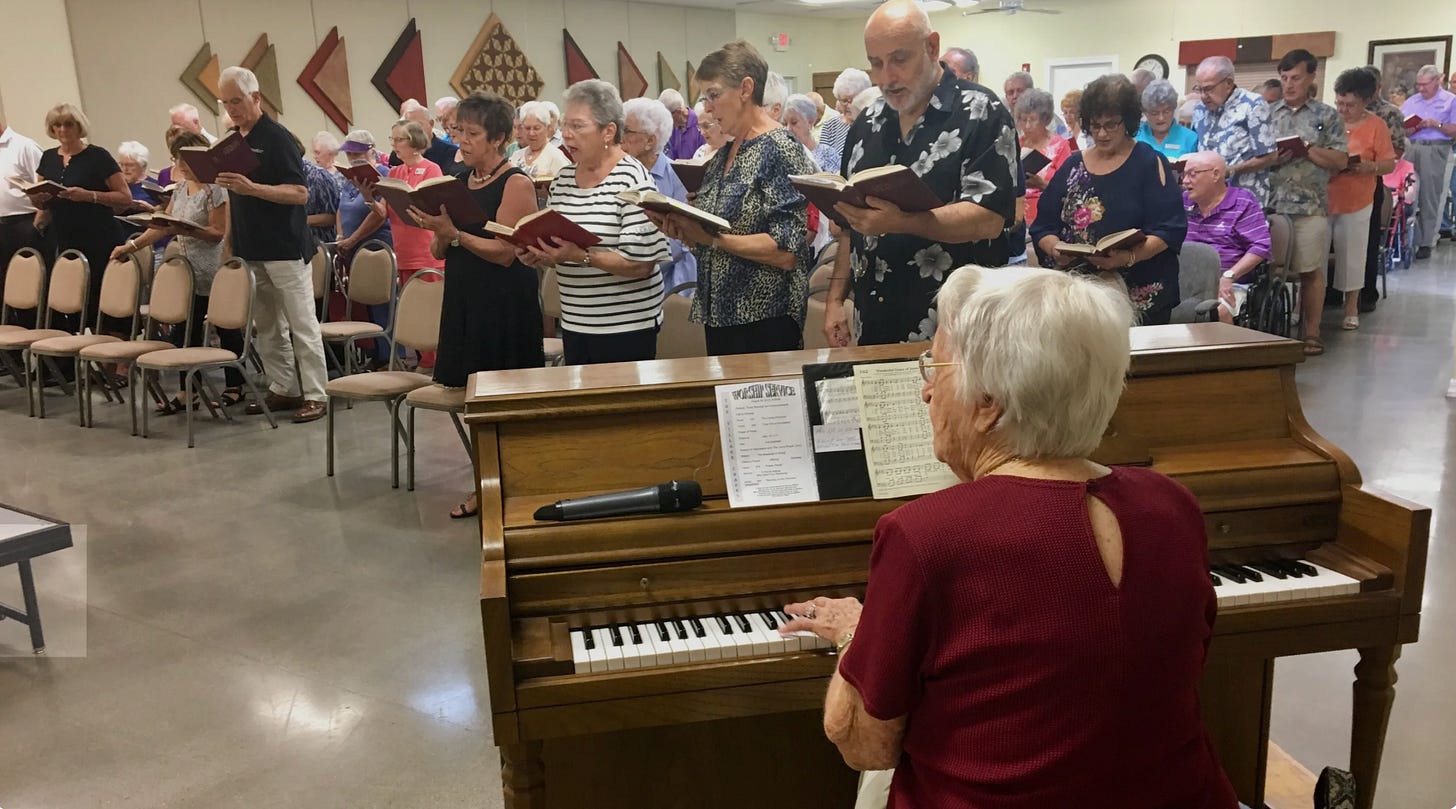
Musically, I’ve experienced chants and boys’ choirs and 24-hour improv worship sets. Old ladies playing hymns at the piano, brass bands, and a Hammond organ in a black gospel church. And that was just in America. Out in rural India there were dholak and dhol drums play along with harmoniums and in Ecuador we got to hear Pan flutes and frame drums praising the Lord.
 can not believe I took this photo
Hallelujah!
Not everybody was excited about this, of course. There’s always somebody.
When I started playing guitar, one of the more “fundamental” ladies in our old country church gave my parents a pamphlet about the Devil’s Beat, warning them of the dangers of rock and roll and how “African rhythms” had worked their way into that evil music. I don’t remember exactly where it went from there, but basically we needed to burn our guitars and all keep singing southern gospel. It’s all pretty silly, of course. Especially when you think that Christianity was thriving in Northern Africa while the Bible was still being written! Bring on those African rhythms, baby!
(Plus, if you’ve ever seen white people clap on the 1s and 3s, don’t tell me THAT’s not the Devil’s Beat.)
My point being: Christians live all over the world and come from all different backgrounds. That implies different styles of music, from Handel to Hillsong.
There’s nothing inherently wrong or inherently superior with one style of music over another. There are just some you’re more comfortable with than others.
Remember: the thing that is safe and traditional to you was once shocking and offensive to someone else.
So I step into the hornets’ nest of these next few paragraphs carefully.
Sacred songs have always been sung by worshiping communities. The Psalms provided a hymn book for those with the ability to read it (for much of history most people couldn’t), and often they were taught as they were set to music. Other songs of praise and lament were passed down through generations via oral tradition as well.
What style were these songs? Depends on where you were, when you were, and who your family was.
Eventually, new technologies made it possible for lyrics and then notation to actually publish songs far and wide. This is where we get the first hymnals, many of which were just books of lyrics, which could be sung along with any number of traditional or local songs.
You’ve maybe heard that many of the hymns we now hold as classics are set to melodies originally heard in village pubs. This is why.
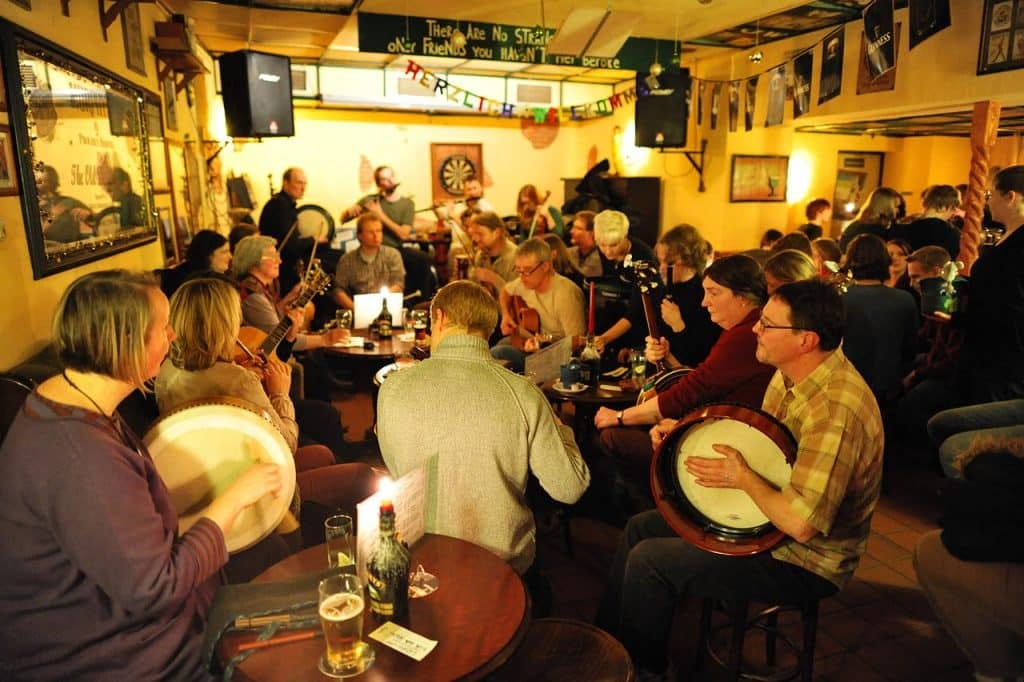
If I ever go missing do not go looking for me in Ireland. I do not want to be found.
As technology kept advancing and music became an actual business, the denominations and their hymnals gave way to publishing companies’ and record labels’ albums and videos as our main form of church song discovery.
Two interesting things have happened because of this:
As technology kept advancing and music became an actual business, the denominations and their hymnals gave way to publishing companies’ and record labels’ albums and videos as our main form of church song discovery.
Two interesting things have happened because of this:
1. We all started singing the same songs.
No longer did we just agree on those few songs that ran along the rooftops and jumped into each of our hymnals. We were now almost all singing completely the same songs. Go to any evangelical church between 1995 and 2020 and you could pretty much pick the set list before you walked in, whether you had been to that church before or not.
We got our music from the same eight or ten companies and, with help from Christian bookstores and Christian radio, their marketing departments slowly drowned out our denominational, regional, and familial idiosyncrasies.
They told us who we were and we said “Thank you, Mr. Tomlin, can we have another?”
Strangely: This has changed again in the past few years, though, as worship leaders have found themselves with individualized algorithms. Now Spotify teaches one leader one certain set of songs and a different leader another. Their churches then learn the songs the leaders are fed.
For a generation we all spoke the same language, narrow as it was. Suddenly we are like tweens who each month have a radically new dialect, foreign to their parents and most outsiders. Time will tell what comes of this development.
The other interesting thing that happened was:
2. We all started to sound the same.
Because we were no longer applying the lyrics to our local music, nor were we reading the music at the piano or organ or with our orchestra, we were now simply trying to recreate the same album that brought us the song.
We no longer separated the passenger from the vehicle they arrived in. If the guitarist played this lick with this Strymon pedal then that’s how the song goes.
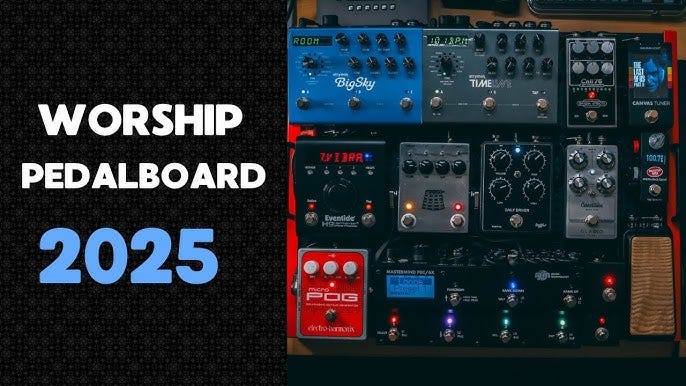
I hate how much I love this
That won’t hold up in copyright court, of course, and not everyone follows this line of thinking, but more churches than we realize do. And in obvious and less obvious ways.
Even if churches don’t follow an album’s arrangements exactly, how many of us have morphed our style of music to reflect the sound of pop worship albums? Did we even like that kind of music? Did we really think about whether or not it best served the people we’re leading?
I’ve seen churches over and over leading music in styles that seem strange and uncomfortable for them. I wanted to say “Just play bluegrass hymns, it’s ok. Everyone would be happier.” And I regret that I’ve placed this burden on people myself so many times.
I’ve led worship in an old country church where the piano and the organ sat under heavy blankets, and asked a truly amazing older gentleman pianist to hold a keyboard pad for thirty minutes. What was I thinking?
I know I could have done that better in a hundred ways.
And yet, times do change, like I said, and what is boring for one generation cuts to the heart for another. Part of loving our neighbor is dying to ourselves and giving our lives away. That can easily include the style of music we’d prefer.
What is sad, though, is when people are needlessly losing things they love because what they love doesn’t serve a company’s bottom line.
When the old lady loves to play piano and doesn’t get to anymore because it’s not what Elevation does, and therefore it holds less value to us as a community? That’s a grievous loss.
That won’t hold up in copyright court, of course, and not everyone follows this line of thinking, but more churches than we realize do. And in obvious and less obvious ways.
Even if churches don’t follow an album’s arrangements exactly, how many of us have morphed our style of music to reflect the sound of pop worship albums? Did we even like that kind of music? Did we really think about whether or not it best served the people we’re leading?
I’ve seen churches over and over leading music in styles that seem strange and uncomfortable for them. I wanted to say “Just play bluegrass hymns, it’s ok. Everyone would be happier.” And I regret that I’ve placed this burden on people myself so many times.
I’ve led worship in an old country church where the piano and the organ sat under heavy blankets, and asked a truly amazing older gentleman pianist to hold a keyboard pad for thirty minutes. What was I thinking?
I know I could have done that better in a hundred ways.
And yet, times do change, like I said, and what is boring for one generation cuts to the heart for another. Part of loving our neighbor is dying to ourselves and giving our lives away. That can easily include the style of music we’d prefer.
What is sad, though, is when people are needlessly losing things they love because what they love doesn’t serve a company’s bottom line.
When the old lady loves to play piano and doesn’t get to anymore because it’s not what Elevation does, and therefore it holds less value to us as a community? That’s a grievous loss.
Sing it with me, “Let it roar, let it roar, let it roar, let the lion roaaaaaarrrr”
When every church tries to sound like one church in Australia or one church in California, then they no longer sound like their own church in Indiana or in Texas or Alaska. Is that keeping up with the times or dimming the Imago Dei (image of God) unique in the creation of each of God’s children?
The most heartbreaking thing
This is a bit of an aside, but I have to say it. (And I know the emails I’m about to get.)
You may or may not be familiar with this business that has popped up around the need to sound like the worship albums we’re familiar with. There are a few companies, who have grown quite large, that now sell the individual tracks or “stems” from the original albums. The idea is that worship bands can add in and play along with the actual guitar, bass, drum, keys, and background vocal parts of the record.
Here’s what I’ve seen. A church has musicians who would love to play, but instead the the stems of the album are purchased and played on a Sunday morning. Sometimes this fills in the gaps where there is literally no other musician option. Very often, though, it’s more of a “convenience.” Some companies make money, some writers make more money, the band sounds more like everyone else, and the people in the church who want to offer their gifts don’t get to.
When every church tries to sound like one church in Australia or one church in California, then they no longer sound like their own church in Indiana or in Texas or Alaska. Is that keeping up with the times or dimming the Imago Dei (image of God) unique in the creation of each of God’s children?
The most heartbreaking thing
This is a bit of an aside, but I have to say it. (And I know the emails I’m about to get.)
You may or may not be familiar with this business that has popped up around the need to sound like the worship albums we’re familiar with. There are a few companies, who have grown quite large, that now sell the individual tracks or “stems” from the original albums. The idea is that worship bands can add in and play along with the actual guitar, bass, drum, keys, and background vocal parts of the record.
Here’s what I’ve seen. A church has musicians who would love to play, but instead the the stems of the album are purchased and played on a Sunday morning. Sometimes this fills in the gaps where there is literally no other musician option. Very often, though, it’s more of a “convenience.” Some companies make money, some writers make more money, the band sounds more like everyone else, and the people in the church who want to offer their gifts don’t get to.
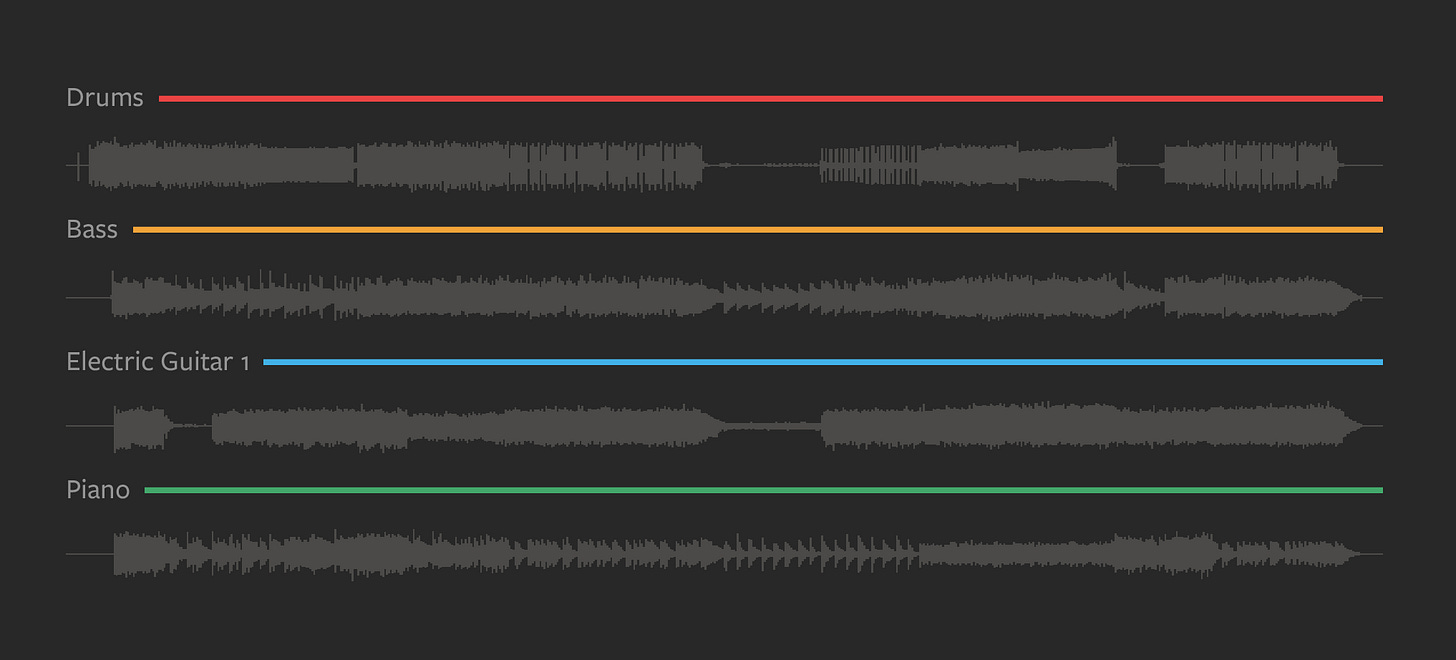
Friends, I know that I personally will be playing guitar all across the country in many churches this Sunday where I am not physically there because people have downloaded my guitar tracks off of some record or another.
I’m deeply honored and grateful to have been a part of songs that get to be sung all over on Sunday mornings, but I will tell you this honestly:
if something I played seven years ago is keeping someone in the actual room from getting to offer their gifts to those around them, that makes me never want to play on another album for the rest of my life.
Who needs creativity or mentorship or the friction of awkward conversations when you can plug in someone else’s perfectly produced product and move on with your life?
This is what happens when what church looks and sounds like becomes more important than what church is.
The questions probably need to be asked: Why are we making the stylistic choices we are making? Why do we have a band? Why do we have an orchestra? What about this old pipe organ? Is this what best serves our community?
I have been invited to lead worship at churches a few times where the band had eight people in it and the congregation had forty. It felt a little like overkill. In my mind, it might have been better with just a guitar and a piano—maybe even just the guitar OR the piano.
But you know what? Maybe those 40 people love the band. Or maybe there are eight people in that church for whom being a part of that band is the absolute best way they can be served by that church community, and the other 40 love and serve those eight by supporting them in this way.
That’s a call that needs to be made by a pastor’s heart. Judge not, lest ye be judged. But it’s a call that needs to be thought about. Not just done because “that’s what worship music is.”
Worship music is the music people make when they worship God.
If you’re the one in the position of leadership, you have to figure out what’s best through prayer and wisdom and probably some mistakes. Most likely there are a number of right answers. I would go so far as to say the only truly wrong answer is to make everyone in the church do what someone on YouTube makes you feel like you’re supposed to do.
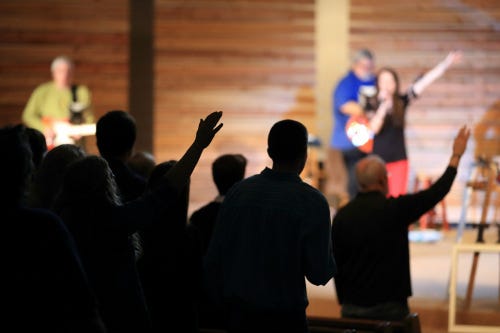
So why does your church use the style of music it does? Is it influenced by the needs of the community as much or more than the pressure of the marketing machines? Does it reflect who’s standing in your congregation? Does it welcome the use of the gifts of your community?
Just please, whatever you do: don’t clap on the 1s and 3s.
The Devil’s Beat is on the prowl.

No comments:
Post a Comment